
Originially published on LinkedIn Pulse by Ruben Harris. This blog tells the story of how Ruben Harris, Timur Meyster and myself left our corporate jobs and embarked on a path to Break Into Startups. Hope you enjoy!
The First Product You Build Is Yourself
From the Social Network to Silicon Valley, the media frenzy surrounding the nature of startups has taken on an idealized life of its own. What many people don’t realize is, proving that you have what it takes to work as a Software Engineer without a Computer Science degree is challenging. Friendship, relationships, overcoming fear, mental health, fitness, reflection, and execution are all essential during this process.
You may have already heard the story about my journey up to this point. What you don’t know is that a big part of what kept me afloat during that entire experience was my bond with the Die Hard twins, Artur and Timur Meyster, and a Quarterback turned hacker named Mike.
This is the ongoing true story and lesson of our journey upward.
 Memories at the Everest House
Low Pressure
"In startups, everything starts out cold."
A cold pitch, a cold email, and even the cold brew
... Read more »

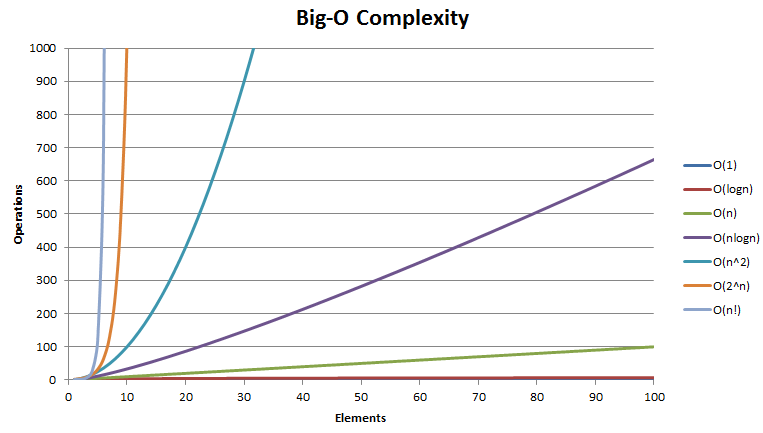 In Part I, we discussed the big-O notation and how to estimate the running time of a program. In this post, I’m going to apply time complexity analysis to various data structures. Understanding algorithmic complexity is crucial for software engineering because it helps identify areas in the program that can be optimized.
 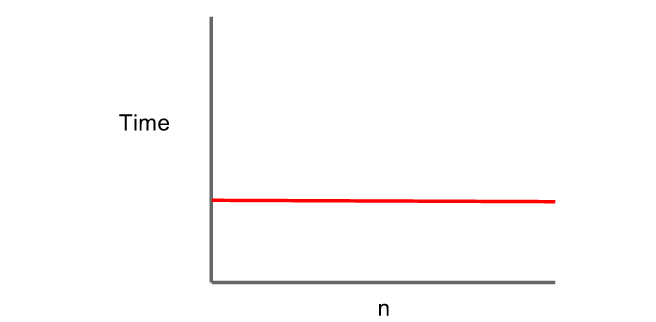 Constant time implies that the number of operations the program needs to perform to accomplish a task is independent of the input size. Constant time operations are ‘order of 1’ or O(1). Examples of constant time are looking up a value in an array, finding the size of an array, or appending values to an array. As the input size grows larger, the time it takes to perform these operations remains constant.
 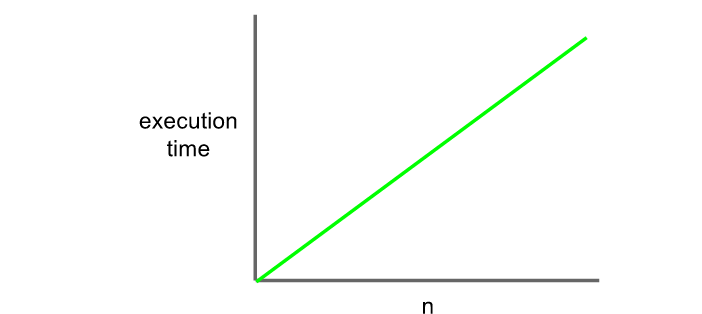 Linear time indicates that run time of the function is directly proportional to the input size. In our phone book example in Part 1, if we examine every single name in the phone book until we found the one we were looking for, it would be considered as